Types of Fire Suppression Systems Used to Protect Southeast Michigan Businesses
A fire suppression system is a built-in network that detects a fire and releases water, chemical agent, gas, or foam to control it. The right type depends on what burns in the space. Metro Detroit businesses, from restaurants to data centers, use several system types because no single agent fits every hazard. This guide compares clean agent, wet chemical, dry chemical, inert gas, and foam systems. It also explains how they differ from sprinklers and how owners choose between them.
Key Takeaways
- A fire suppression system uses water, chemical agents, gas, or foam to control fires before they spread through a building.
- Wet chemical systems protect commercial kitchens, while clean agent and inert gas systems protect data centers and sensitive electrical rooms.
- Sprinklers, dry chemical, and foam each fit different hazards, so building owners match the system to fuel, occupancy, and equipment.
- Semiannual kitchen system checks and annual special hazard inspections keep Southeast Michigan facilities aligned with NFPA standards before winter arrives.
How Suppression Systems Protect Different Commercial Fire Hazards
Commercial fire hazards require different suppression methods based on the materials involved, the surrounding equipment, and the potential consequences of a fire. A commercial kitchen grease fire presents different risks than a fire involving sensitive electronics or flammable liquids. Understanding how each suppression system works helps facility managers maintain appropriate fire protection for their buildings and equipment.
Fire Sprinkler Systems Control Fires in Commercial Buildings
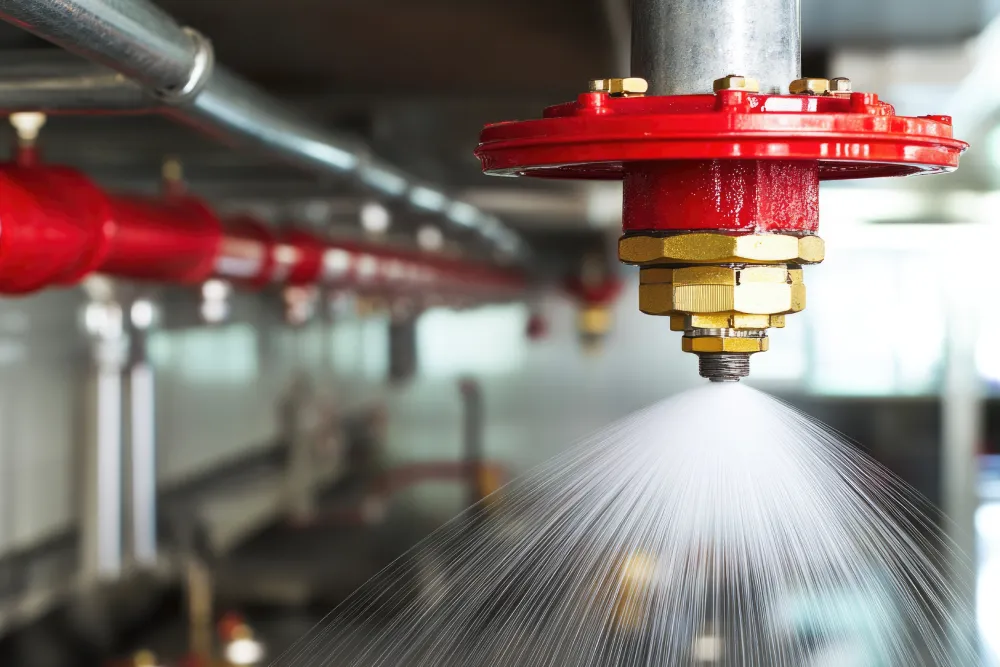
Commercial fire sprinkler systems use water to control or suppress fires, helping limit heat buildup and fire spread throughout a building.
Wet pipe sprinkler systems keep water in the piping for immediate discharge when a sprinkler activates. Dry pipe systems use pressurized air or nitrogen in the piping and are commonly used where freezing temperatures are a concern. Pre-action systems require additional detection or activation conditions before water enters the sprinkler piping.
Individual sprinkler heads generally activate when exposed to sufficient heat rather than discharging throughout the entire building simultaneously.
Regular inspection, testing, and service of existing commercial Fire Sprinkler Systems help facility managers maintain system readiness.
Wet Chemical Suppression Systems Control Commercial Kitchen Grease Fires
Commercial kitchen fire suppression systems use wet chemical agents designed to control fires involving cooking oils and grease.
When activated, the system releases the agent through nozzles positioned to protect cooking appliances and associated ventilation areas. The agent cools burning cooking oils and helps create a protective layer that reduces the risk of reignition.
These systems are commonly used around fryers, griddles, ranges, and commercial kitchen exhaust hoods. ANSUL, CaptiveAire, and Pyro-Chem are established names in commercial kitchen fire suppression.
NFPA 96 establishes fire protection requirements for commercial cooking operations.
Routine Kitchen Fire Suppression inspection and maintenance help businesses identify deficiencies and maintain protection. Fire Systems of Michigan provides inspection and repair for qualifying systems the company originally installed.
Clean Agent Suppression Systems Protect Sensitive Electronic Equipment
Clean agent fire suppression systems use gaseous extinguishing agents to control fires without leaving the residue associated with water or dry chemical discharge.
These systems are commonly used in server rooms, telecommunications facilities, electrical control rooms, and other areas containing sensitive equipment.
FM-200, also known as HFC-227ea, is one example of a clean agent. It suppresses fire primarily by absorbing heat. Although clean agents reduce residue-related cleanup, equipment can still be damaged by the fire or discharge conditions.
NFPA 2001 addresses clean agent fire extinguishing systems.
Facility managers maintaining existing FM-200 systems should account for changing environmental regulations and potential limitations on replacement agent availability.
Inert Gas Suppression Systems Protect Enclosed High-Value Spaces
Inert gas suppression systems control fires by reducing the oxygen concentration within a protected enclosure to a level that cannot sustain combustion.
These systems use gases such as nitrogen, argon, or blends of inert gases. Because they leave no extinguishing residue, they are used in certain telecommunications rooms, archives, control rooms, and other specialized environments.
Inert gas systems typically require high-pressure storage cylinders and properly designed discharge arrangements. Their operation also requires careful consideration of occupant safety, enclosure integrity, and pressure management.
Regular maintenance of existing Special Hazard Fire Suppression systems helps facility managers identify equipment deficiencies and address service needs.
Dry Chemical Suppression Systems Control Flammable Liquid and Industrial Fire Hazards
Dry chemical suppression systems discharge a powdered extinguishing agent that interrupts the chemical reactions sustaining a fire.
These systems are used for certain industrial hazards, including paint spray operations, flammable liquid processing areas, and specialized manufacturing equipment.
The appropriate dry chemical agent depends on the protected hazard and system design. Although effective for suitable applications, dry chemical discharge can leave residue that requires cleanup and equipment evaluation.
Fire Systems of Michigan provides dry chemical fire suppression inspection and installation services for qualifying commercial applications.
Foam Suppression Systems Control Certain Flammable Liquid Fires
Foam fire suppression systems use a foam blanket to separate flammable liquid surfaces from oxygen and help reduce the release of flammable vapors.
These systems have traditionally been used in certain fuel storage, chemical processing, and industrial facilities where flammable liquid hazards are present.
Foam suppression requires careful consideration of the fuel involved, the selected agent, and applicable environmental regulations. Restrictions involving PFAS-containing firefighting foams have also affected maintenance and replacement decisions.
Facility managers with existing foam systems should consult qualified fire protection professionals to evaluate applicable requirements and available alternatives.
Protection Priorities for Southeast Michigan Business Facilities
Commercial facilities across Southeast Michigan face different fire protection challenges depending on their operations, equipment, occupancy, and building conditions.
From data centers and healthcare facilities to commercial kitchens and industrial properties, facility managers must account for fire hazards, code requirements, inspection schedules, and Michigan’s seasonal conditions. The following priorities help businesses maintain effective fire protection systems.
Assess Facility-Specific Fire Hazards and Code Requirements
Every commercial facility should begin with an assessment of its fire hazards, occupancy, equipment, and existing fire protection systems.
Facility managers should identify combustible materials, potential ignition sources, sensitive equipment, and areas where water-based suppression may not be suitable. Building occupancy, local fire code requirements, insurance expectations, and applicable NFPA standards also influence protection needs.
A qualified fire protection professional can help evaluate existing systems and identify inspection, testing, maintenance, or repair needs.
Maintain Specialized Fire Protection for Data Centers and Sensitive Equipment
Data centers, telecommunications rooms, and facilities containing sensitive electronics require fire protection strategies that address both fire hazards and potential equipment damage.
Clean agent and inert gas suppression systems can provide protection without leaving extinguishing residue. Some facilities also use pre-action sprinkler systems and early smoke detection to support their overall fire protection strategy.
Facility managers should prioritize detection reliability, enclosure integrity, suppression agent availability, and ongoing maintenance.
Professional service and repair of existing Special Hazard Fire Suppression systems help businesses address deficiencies that could affect system performance.
Prioritize Commercial Kitchen Fire Suppression in Restaurants and Food Facilities
Restaurants, institutional kitchens, hospitals, and commercial food preparation facilities face fire hazards involving cooking oils, grease, and high-temperature equipment.
Wet chemical kitchen suppression systems are designed to protect commercial cooking appliances and associated exhaust areas. These systems require properly maintained nozzles, detection components, and agent supplies to remain ready for use.
Facility managers should also account for grease accumulation, changes to cooking equipment, and ventilation system maintenance.
Regular Kitchen Fire Suppression inspections help identify potential deficiencies. Fire Systems of Michigan provides inspection and repair services for qualifying kitchen suppression systems the company originally installed.
Schedule Fire Suppression Inspections and Maintain Compliance Records
Routine inspections are a priority for Southeast Michigan businesses because suppression systems must remain operational between scheduled service visits.
Commercial kitchen wet chemical suppression systems generally require professional inspection and maintenance at least every six months under applicable NFPA standards. Clean agent, inert gas, and other special hazard systems have their own inspection, testing, and maintenance requirements.
Facility managers should maintain records of completed inspections, identified deficiencies, repairs, and corrective actions. These records support discussions with fire officials, insurers, and other parties responsible for facility compliance.
Healthcare facilities may also have additional fire protection documentation requirements associated with accreditation and regulatory oversight.
Budget for Ongoing Fire Protection Inspection, Maintenance, and Repairs
Fire protection budgeting should account for more than the initial cost of equipment. Existing systems require periodic inspections, testing, maintenance, and occasional repairs throughout their service life.
Costs depend on the type of suppression system, the protected hazard, equipment condition, agent availability, and accessibility of system components.
Special hazard systems may involve additional expenses related to agent replacement, cylinders, or specialized components. Commercial kitchens may require repairs when cooking equipment or protected hazards change.
Facility managers should review maintenance records, outstanding deficiencies, and upcoming inspection requirements when planning annual fire protection budgets.
Choose an Experienced Commercial Fire Protection Service Provider
Working with an experienced fire protection provider helps businesses coordinate inspection, testing, maintenance, and repair requirements across multiple systems.
Facility managers should evaluate a provider’s qualifications, experience with their specific equipment, familiarity with applicable codes, and ability to address identified deficiencies.
Fire Systems of Michigan supports commercial fire protection needs throughout Southeast Michigan, including Fire Alarm Systems, Fire Sprinkler Systems, Fire Extinguishers, and qualifying fire suppression equipment. Businesses can also review customer feedback when evaluating service providers.
Prepare Fire Protection Systems for Michigan’s Winter Conditions
Southeast Michigan’s freezing temperatures create additional considerations for commercial fire protection systems.
Facility managers should pay particular attention to dry pipe sprinkler systems, unheated building areas, exposed piping, and equipment susceptible to freezing conditions.
Commercial kitchens may also experience increased activity during the holiday season, making it important to address outstanding suppression system deficiencies before peak operating periods.
Scheduling inspections and necessary repairs ahead of winter can help businesses identify problems before seasonal conditions complicate maintenance.
Request a Fire Suppression System Quote in Metro Detroit
Fire Systems of Michigan provides commercial fire protection services across Southeast Michigan, including Detroit, Novi, and Troy. Support includes inspection, repair, and maintenance for kitchen suppression and special hazard systems. Request a quote, and a Fire Systems specialist will contact you within 24 hours.
Contact us to discuss your facility.
Frequently Asked Questions
What type of fire suppression system is best for a commercial kitchen?
Wet chemical systems suit commercial kitchens because the agent cools grease fires and forms a soapy layer that blocks reignition. Ansul fire suppression system designs are common, and NFPA 17A governs installation and testing.
Do fire sprinklers shut off automatically?
Sprinklers do not shut off automatically. Each head opens only from heat and keeps flowing until the fire department or a trained technician closes the control valve. Only the heads exposed to heat open, which limits water damage.
What is a pre-action sprinkler system?
A pre-action system holds air or nitrogen in the pipes and fills them with water only after a detection device signals a fire. It protects water-sensitive areas like data rooms and archives.
How much does a fire suppression system cost for a house?
Residential costs vary with home size, water supply, and system type, so no single price applies. Fire Systems of Michigan focuses on commercial properties, so a local residential sprinkler installer can provide estimates.
Category: Fire Suppression Systems Let us help.
Fill out the form and a Fire Systems specialist will
contact you within 24 hours.