
The Different Classes of Fire Extinguishers Every Southeast Michigan Business Should Know
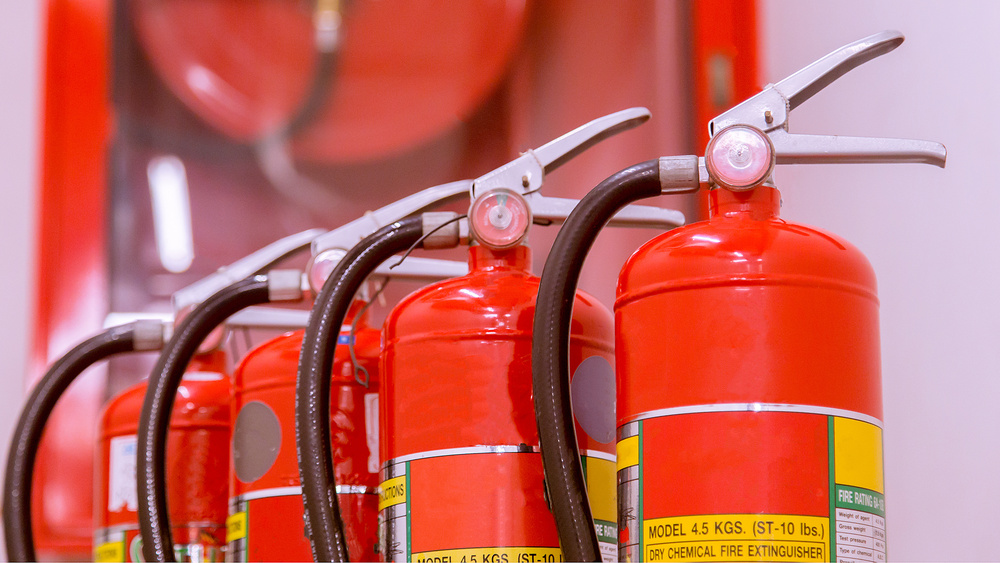
There are five main types of fire extinguishers, each rated for a specific class of fire. Understanding the types of fire extinguishers helps Southeast Michigan business owners protect employees, customers, and property. Ordinary combustibles, flammable liquids, electrical equipment, metals, and cooking oils all require different extinguishing agents. Choosing the wrong type can fail to stop a fire or make it worse.
This guide breaks down each class and explains how to match extinguishers to your facility’s specific fire risks.
Key Takeaways
- Fire extinguishers are grouped into five classes, each matched to a specific fuel source or fire type.
- Class A extinguishers handle wood, paper, and cloth, while Class K covers commercial kitchen grease fires.
- Electrical fires require Class C extinguishers rated safe for use around energized equipment.
- Southeast Michigan facilities often need multiple extinguisher types placed according to occupancy and hazard zones.
How to Choose the Right Fire Extinguisher for Southeast Michigan Businesses
Different fire hazards require different extinguishing agents to control them safely and effectively. Matching the correct fire extinguisher class to each area of a commercial building helps reduce risk while improving emergency preparedness.
Choose Class A Extinguishers for Ordinary Combustibles
Office buildings, warehouses, and retail spaces across Southeast Michigan typically store large amounts of paper, wood, and fabric. These ordinary combustibles fall under Class A fires. A Class A extinguisher, often filled with water or a multipurpose dry chemical, cools the material and stops the burning process. Facilities with heavy paper storage or wood-frame construction should prioritize Class A coverage in main hallways and storage rooms.
Choose Class B Extinguishers for Flammable Liquids
Manufacturing and industrial buildings frequently store solvents, oils, gasoline, or other flammable liquids. These substances create Class B fires, which spread quickly across a liquid surface. Class B extinguishers use dry chemical or carbon dioxide agents to smother the flame and cut off its oxygen supply. Facilities handling flammable liquids should place these extinguishers near storage tanks and mixing stations.
Choose Class C Extinguishers for Electrical Equipment
Electrical fires, classified as Class C, occur in wiring, breaker panels, transformers, and data equipment. Water-based extinguishers cannot be used here because water conducts electricity and increases shock risk. Carbon dioxide or clean agent extinguishers are designed for use on energized electrical equipment without leaving residue. Buildings with server rooms or electrical rooms in Southeast Michigan should install Class C-rated units near these spaces.
Choose Class K Extinguishers for Commercial Kitchens
Commercial kitchens generate high-temperature grease fires that fall under Class K. Cooking oils and animal fats burn differently than solid combustibles, requiring a wet chemical agent that cools and creates a soap-like barrier over the grease. Restaurants, cafeterias, and hotel kitchens throughout Southeast Michigan should pair Class K extinguishers with a properly installed kitchen suppression system above cooking equipment.
Use Class D Extinguishers for Combustible Metals
Some manufacturing facilities work with combustible metals like magnesium, titanium, or sodium. These materials create Class D fires that react violently to water and standard extinguishing agents. Specialized dry powder extinguishers designed for metal fires are required in these environments. Facilities that machine or process metal shavings should confirm whether their operations create this specific fire risk.
Plan for Multiple Fire Hazards Across Your Facility
Many commercial buildings contain more than one fire hazard type in different areas. A property with office space, a server room, and a loading dock may need Class A, C, and B coverage in separate zones. Facility managers should map out where each hazard exists before selecting extinguisher placement. This zone-based approach reduces confusion during an emergency and keeps the correct extinguisher within reach.
Choose ABC Extinguishers for Mixed-Hazard Areas
ABC extinguishers use a dry chemical agent effective on Class A, B, and C fires, making them a common choice for general commercial spaces. This multipurpose rating simplifies extinguisher selection for buildings with mixed but moderate fire risks. However, ABC units are not a substitute for Class K or Class D extinguishers where those specific hazards exist. Facility teams should confirm that an ABC rating actually matches every hazard present in the space.
Fire Extinguisher Selection and Compliance Priorities for Your Facility
Choosing the appropriate extinguisher class should be supported by proper placement, routine maintenance, and ongoing compliance efforts. Following established inspection schedules and fire code requirements helps ensure extinguishers remain accessible, functional, and ready for use when an emergency occurs.
Following NFPA Placement and Spacing Standards
NFPA 10 outlines requirements for extinguisher placement, travel distance, and mounting height in commercial buildings. Extinguishers generally need to be reachable within a specific travel distance depending on the hazard class present. Southeast Michigan facilities under this standard should verify that extinguishers are visible, unobstructed, and mounted at compliant heights. Skipping this step can result in a failed inspection even if the correct extinguisher type is present.
Scheduling Routine Inspections and Documentation
Fire extinguishers require monthly visual checks and an annual inspection performed according to manufacturer and code requirements. Documentation of these inspections is often requested during fire marshal visits or insurance audits. Facility managers should keep dated inspection tags current and store records in an accessible location. Missing documentation can create compliance gaps even when the extinguishers themselves are functional.
Recognizing When Extinguishers Need Recharge or Replacement
Extinguishers lose pressure or effectiveness over time and require recharging after use or at set service intervals. A pressure gauge reading outside the operable range signals that recharge service is needed. Facilities should also check for visible damage, corrosion, or a broken tamper seal during routine walkthroughs. Replacing an outdated or damaged unit before an emergency prevents equipment failure when it matters most.
Training Staff on the PASS Technique
Employees should understand the PASS method: pull the pin, aim low, squeeze the handle, and sweep side to side. This technique applies across nearly all extinguisher classes and gives staff a consistent response during a small fire. Southeast Michigan employers in retail, office, and industrial settings benefit from periodic refresher training. Staff who know how to react quickly can often contain a fire before it spreads.
Aligning Extinguisher Types With Insurance and Code Requirements
Insurance carriers and local fire codes often specify minimum extinguisher coverage based on occupancy type and square footage. A mismatch between installed extinguishers and required hazard classes can affect both compliance status and insurance standing. Facility managers should review their occupancy classification against current NFPA and local requirements. This review helps confirm that extinguisher types on-site actually satisfy the applicable code.
Coordinating Extinguisher Coverage With Broader Fire Protection Systems
Extinguishers work best as one part of a layered fire protection strategy that includes alarms, sprinklers, and suppression systems. A building with strong detection and suppression coverage still needs correctly placed extinguishers for early-stage response. Facility teams should review extinguisher placement whenever they update alarm or sprinkler coverage. Coordinating these systems together closes gaps that a single layer of protection might miss.
Get Your Facility’s Fire Extinguishers Reviewed
A facility with the wrong extinguisher type is not truly protected, even if one is mounted on the wall. Fire Systems of Michigan works with commercial properties across Southeast Michigan to support fire extinguisher inspection, repair, and upgrade needs. Contact us to request a quote and get your extinguisher coverage reviewed against your facility’s specific hazards.
Frequently Asked Questions
What are the 4 types of fire extinguishers?
The four most referenced types are Class A for ordinary combustibles, Class B for flammable liquids, Class C for electrical fires, and Class K for kitchen grease fires. Class D exists for combustible metals in specialized settings.
What are Class ABC and D fire extinguishers?
ABC extinguishers use dry chemical agents effective on ordinary combustibles, flammable liquids, and electrical fires. Class D extinguishers use specialized dry powder designed for combustible metal fires like magnesium or titanium found in certain manufacturing settings.
What are the 5 classes of fire?
The five fire classes are A (ordinary combustibles), B (flammable liquids), C (electrical equipment), D (combustible metals), and K (cooking oils and fats). Each class requires a matching extinguisher agent for safe, effective use.
What are the 5 types of fire extinguishers and their colors?
Water extinguishers are labeled with a red band, foam with cream, dry powder with blue, carbon dioxide with black, and wet chemical with yellow. These color codes help staff quickly identify the correct extinguisher type.
Category: Fire Extinguishers Let us help.
Fill out the form and a Fire Systems specialist will
Let us help.
Fill out the form and a Fire Systems specialist willcontact you within 24 hours.